

Resilience Economics: The Best Path Out of Economic Crisis in Iran / Government Should Minimize Intervention in the Economy
 Dec 28, 2014
According to Sefir-e-Aflak, the Supreme Leader, with the aim of ensuring dynamic growth and improving the indicators of economic resilience and achieving the goals of the twenty-year vision document, announced the general policies of the resistance economy with a jihadi, flexible, opportunity-creating, productive, endogenous, progressive, and outward-looking approach.

According to his announcement, these policies should be able to bring the country to a high degree of growth and development so that it is both safe from the unjust sanctions of the West and the world of arrogance and can achieve internal self-belief.
- 1. Providing conditions and activating all facilities and financial resources and human and scientific capital of the country in order to develop entrepreneurship and maximize the participation of all members of society in economic activities by facilitating and encouraging collective cooperation and emphasizing the improvement of income and the role of low-income and middle classes.
- 2. Leading the knowledge-based economy, implementing and executing the country's comprehensive scientific map and organizing the national innovation system in order to improve the country's global position and increase the share of production and export of knowledge-based products and services and achieving the first rank of the knowledge-based economy in the region.
- 3. Focusing on productivity growth in the economy by strengthening production factors, empowering the workforce, strengthening the competitiveness of the economy, creating a competitive environment between regions and provinces, and utilizing diverse capacities and capabilities in the geography of the advantages of the country's regions.
-4. Using the capacity of implementing targeted subsidies in order to increase production, employment, and productivity, reduce energy intensity, and improve social justice indicators.
- 5. Fair sharing of factors in the production-to-consumption chain in proportion to their role in creating value, especially by increasing the share of human capital through improving education, skills, creativity, entrepreneurship, and experience.
- 6. Increasing domestic production of inputs and essential goods (especially in imported items), and prioritizing the production of strategic products and services and creating diversity in the sources of supply of imported goods with the aim of reducing dependence on limited and specific countries.
- 7. Ensuring food and medical security and creating strategic reserves with an emphasis on increasing the quantity and quality of production (raw materials and goods).(
- 8. Managing consumption with an emphasis on implementing the general policies of reforming the consumption pattern and promoting the consumption of domestic goods along with planning to improve quality and competitiveness in production.
- 9. Comprehensive reform and strengthening of the country's financial system with the aim of responding to the needs of the national economy, creating stability in the national economy, and taking the lead in strengthening the real sector.
- 10. Comprehensive and targeted support for the export of goods and services in proportion to the added value and with positive net foreign exchange earnings through:
- Facilitating regulations and expanding necessary incentives.
- Expanding foreign trade and transit services and the necessary infrastructure.
- Encouraging foreign investment for export.
- Planning national production in accordance with export needs, shaping new markets, and diversifying economic ties with countries, especially with the countries of the region.
- Using barter mechanisms to facilitate transactions if needed.
- Creating stability of procedure and regulations regarding exports with the aim of expanding Iran's sustainable share in target markets.
- 11. Developing the area of operation of free and special economic zones of the country in order to transfer advanced technologies, expand and facilitate production, export of goods and services, and provide essential needs and financial resources from abroad.
- 12. Increasing the country's economic resilience and reducing vulnerability through:
- Developing strategic ties and expanding cooperation and participation with the countries of the region and the world, especially neighbors.
- Using diplomacy to support economic goals.
- Using the capacities of international and regional organizations.
- 13. Countering the vulnerability of income from oil and gas exports through:
- Choosing strategic customers.
- Creating diversity in sales methods.
- Involving the private sector in sales.
- Increasing gas exports.
- Increasing electricity exports.
- Increasing petrochemical exports.
- Increasing exports of petroleum products.
- 14. Increasing the country's strategic oil and gas reserves in order to influence the global oil and gas market and emphasize the preservation and development of oil and gas production capacities, especially in joint fields.
- 15. Increasing added value by completing the value chain of the oil and gas industry, developing the production of goods with optimal efficiency (based on the energy consumption intensity index) and increasing the export of electricity, petrochemical products, and petroleum products with an emphasis on the conservation of resources.
- 16. Saving on the country's public expenses with an emphasis on fundamental changes in structures, rationalizing the size of the government, and eliminating parallel and unnecessary agencies and redundant expenses.
- 17. Reforming the government's revenue system by increasing the share of tax revenues.
- 18. Annually increasing the share of the National Development Fund from the resources obtained from oil and gas exports until the budget's dependence on oil is cut off.
- 19. Making the economy transparent and healthy and preventing actions, activities, and corruption-generating areas in monetary, commercial, currency, and... sectors.
- 20. Strengthening the jihadi culture in creating added value, wealth production, productivity, entrepreneurship, investment, and productive employment and awarding the resistance economy medal to people with outstanding services in this field.
- 21. Explaining the dimensions of the resistance economy and its discourse, especially in scientific, educational, and media environments, and turning it into a comprehensive and prevalent national discourse.
- 22. The government is obliged to take the following measures to achieve the general policies of the resistance economy by coordinating and dynamically mobilizing all the country's facilities:
- Identifying and utilizing scientific, technical, and economic capacities to access offensive capabilities and appropriate actions.
- Monitoring sanctions programs and increasing costs for the enemy.
- Managing economic risks by preparing intelligent, active, rapid, and timely response plans in the face of internal and external risks and disruptions.
- 23. Making the distribution and pricing system transparent and streamlined and updating the methods of market supervision.
- 24. Increasing the standard coverage for all domestic products and promoting it.
Based on these policies, the government is obliged to use all solutions so that the country moves towards comprehensive development based on the 1404 vision.
In this regard, economic experts have each presented ideas and come to the aid of the government so that it can safely follow this path. Although, based on this notification, the economy is not only limited to the government, and more than anything, the role of elites, people, and the private sector is evident in it, but the government, as the custodian of the country's economy, is obliged to implement the policies of the resistance economy.
In the meantime, Sefir-e-Aflak Information Base, by holding a series of specialized meetings with the focus on "Implementation of the policies of the resistance economy, solutions to overcome the economic crisis and the challenges ahead of the implementation of these policies", tries to answer many of the challenges of the country's economy by using the opinions of Lorestani experts.
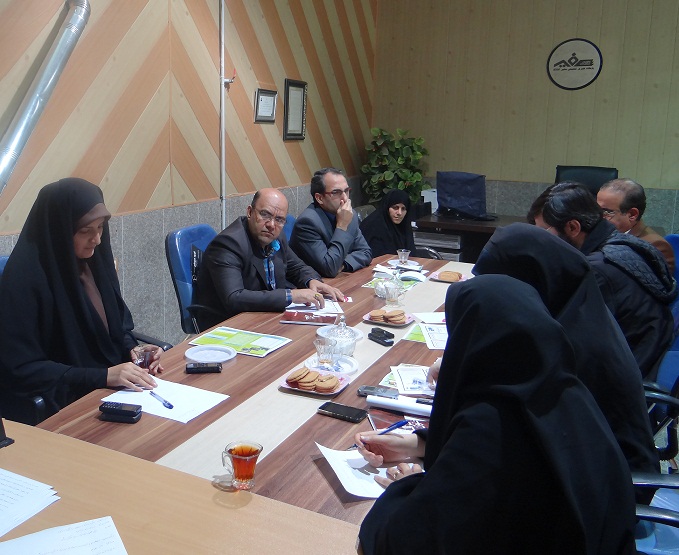
In this round table, which was held with the presence of Reza Sepehvand, Ph.D. in Economics and Head of the Faculty of Economics of Lorestan University, Masoud Taherinia, Ph.D. in Accounting and a member of the faculty of the Faculty of Economics of Lorestan University, Ali Heydar Amiri, a political expert and former director of the Lorestan Elite House, the policies of the resistance economy were explained. In this regard, experts examined the challenges of Iran's underdevelopment and put forward scientific solutions to overcome these issues.
* The government should minimize its interference in the country's economy
Reza Sepehvand explained about this: The first time the discussion of the resistance economy in Iran was raised by Mohsen Rezaei. In the early days when the discussion of sanctions was raised in 1990, he introduced this discussion as a discussion into the field of Iranian economic literature. The resistance economy does not have a scientific position in economic theories. It is a new concept that seeks a solution to prevent external economic shocks that are imposed on the country's economy. Sanctions put the country in a siege and a wall that its connection with the outside world was gradually cut off. In systems theory, it is said that the more closed a system is, the more it moves towards collapse. The less the system exchanges with the outside, the more it moves towards collapse.
In these circumstances, what could we do? In any case, we should not be passive. We provided solutions so that we could be saved from these shocks and heavy international attacks.
Following the discussion by Mohsen Rezaei, the Supreme Leader announced the policies of the resistance economy.
The basis of the resistance economy is that the country moves towards the health of the economy. If we can make the economy healthy, that is, prevent waste, prevent monetary indiscipline, and avoid entering fields that do not have an advantage, we have implemented the policies of the resistance economy.
Resistance means emphasizing internal resources, which is the strength of the internal economy. And then, to minimize internal weaknesses as much as possible. In this direction, the opportunities from outside were used to neutralize external threats. This is the basis of the resistance economy.
There is no theory in economics that is like the policies of the resistance economy. Of course, this is from a scientific point of view, but from a political point of view, one must resist in the field of economics. This resistance is against governments that want to paralyze the Iranian economy with a program and in accordance with their wishes. Therefore, we must provide and formulate solutions and programs in the form of a resistance economy.
In the discussion of whether sanctions have caused us to think about implementing the policies of the resistance economy, it should be said that all economists agree that sanctions have had an effect of perhaps 10 percent or less on the country's economy. It should be said that what has led the Iranian economy to crisis more than anything else is mismanagement.
If the country can produce a commodity or product in which it has an advantage, it has resisted the attacks and sanctions. Unfortunately, the country is moving towards productions that do not have an advantage in them, such as cars or mobile phones. While some countries are moving towards productions that have an advantage in them, such as China and Turkey, which are two clothing manufacturers in the world.
While there are resources in Iran that can be turned into a global advantage. For example, the same medicinal plants that grow abundantly in Lorestan. It has good capacity and there are experienced experts in this province and the country who can be used to brand them in the world.
Unfortunately, Iran's only capital is oil, which is also limited. With the price reduction that we are currently witnessing, sanctions have no effect on its sale.
The most important imported goods to Iran are agricultural products. This means the ultimate weakness of a country in providing and producing its essential goods. The most goods that are imported to Iran are wheat, rice, corn, and meal.
14 billion dollars are spent on the import of agricultural products. About seven and a half million tons of wheat are imported to Iran every year, and with the trend we are following in the reduction of oil prices, all of it is spent on the import of agricultural products. Iran's oil revenue is about 15 billion dollars a year, all of which is spent on the import of agricultural products. While we can produce our essential products inside. Spend currency on importing goods that have an advantage for us. Such as machinery and up-to-date equipment to boost production.
He added: If Iran cannot produce its essential goods inside, it will face a terrible crisis called the sanctions of essential goods. Suppose the West, instead of sanctioning oil, sanctions the import of wheat or agricultural products, then Iran cannot resist it. So it must go towards the production of food.
Unfortunately, Iran has not made progress in the field of scientificizing the economy, especially the resistance economy. The discussion of economics in Iran is a macro discussion, that is, it is under sovereignty. The government, the parliament, and the judiciary are all involved in macro economic indicators.
My solution as an economic expert is that the government should not interfere in the economy. Many government regulations are cumbersome. The government should only play a supervisory role. Facilitating the production process and being a supporter, not by interfering in the economy and determining heavy duties and taxes, which lead to the bankruptcy of production enterprises.
The problem that has led to the economic recession in Iran more than anything else is the passive role of banks. More than 600 thousand billion tomans of people's deposits are with banks. Instead of putting this money into the production cycle, banks lend more than half of it to people with an interest rate of 25 to 30 percent. Many people who use the production and employment facilities of banks save them in another bank and receive an annual interest of 25 percent. This means an increase in liquidity in society and a severe economic recession. Money is only transferred from this bank to that bank. But unfortunately, the government does not take any action in this regard. Banks are getting closer to bankruptcy day by day. But the government prevents their bankruptcy. People should have the risk every moment that banks may go bankrupt at any moment.
Governments are divided into three categories in the discussion of economics: anti-development government like the government of Iraq during Saddam Hussein - development-seeking government that interferes in 5 percent of the economy - open development government
In the discussion of government planning in the country's economy, it should be said that Iran has an economic program in every government that comes to power. The Iranian government is an open development government. The research center of the parliament has reported that 60 percent of the fifth program has not yet been implemented. This is while the government has formulated the sixth program. Jumping from this house to that house has caused many problems for the government.
* Social capital in Iran has fallen sharply
The most important discussion that has become the bane of the Iranian government is the sharp decline in social capital. Social capital is based on trust. Three parameters are considered for social capital: the relationship between the government and the nation - the relationship between the nation and the government - the relationship between people with each other
The government's broken promises in paying the debts of private sector contractors have caused a decline in the government's trust in the people. In another section, about 150 thousand billion tomans of bank facilities are with the people, which people do not settle. This means that people do not trust the government. Another form of this distrust is related to people's relationship with each other. This distrust has led to the failure of 22 million returned checks between banks.
The government plays a role in destroying social capital. Example: The financial value of the Iranian dairy industry is about 25 thousand billion tomans. Some time ago, the Ministry of Health announced that all dairy products produced in Iran use palm oil. This action caused the trust of the people and society in the dairy industry to fall. After this announcement, all dairy factories suffered a 50 percent drop. In social theories, we have that trust is hard to come by and is easily lost and its recovery is not possible. This distrust has also arisen towards the meat industry and meat products in recent years.
Cultural changes take time. It takes years for changes to take place from top to bottom or vice versa. It is both time-consuming and costly. In order to provide a solution for economic reforms, comprehensive changes must be made.
The government's score in lifting sanctions is 20
The government's score in lifting sanctions is 20. The highest advantage of lifting sanctions is that it helps to increase international trust in Iran. So far, the world has made a violent image of us, but Iran's negotiations made the world know that we are not looking for violence and nuclear weapons. Although the sanctions have not yet been lifted, the world understood that Iran's intention is not evil. The lifting of sanctions has the advantage that it attracts the trust of international investors to Iran. Foreign investment in Iran saves the nation from the crisis. All economists consider attracting foreign investors as a way out of the economic crisis in Iran. A foreign investor puts his capital in Japanese banks and receives an interest of one percent, then he is not willing to come to Iran and invest with an interest of ten percent. He will definitely come. It is the Iranian government that should attract investment.
The discussion that the government is pursuing in foreign policy and wants to attract international trust has a score of 20. Even if the sanctions are not lifted, Iran builds trust. We send positive signals and our goal is construction.
The government will face a deficit in the 94 budget
The government has suffered a shortage of credit in the new budget. The budget deficit is coming like a winter. Three economists from the parliament have written a letter to the president and requested that the government provide food for the poor.
Where is the government's 94 budget provided from? The government's revenue sources are from several lines: oil sales - taxes - customs duties and commercial profits - sale of participation bonds and surplus assets and government assets and recently also military service!
In the new budget, it is predicted that 80 thousand billion tomans from oil sales, 80 thousand billion tomans in taxes, 15 thousand billion tomans from customs duties and commercial profits, and the rest from the sale of participation bonds and the sale of surplus assets and government assets and the sale of military service will be given to the government to provide the new budget. The 2,000 billion toman fine from the traffic police is also included in providing the resources for the new budget.
The flaws that are introduced to this provision of resources are that the government can only rely on oil sales. Of course, the government has closed oil at 70 dollars, while this price will decrease to 50 dollars. In the discussion of receiving taxes, 80 thousand billion tomans will not be realized at all. Last year, 8 percent of the guilds received taxes, which broke the market's back. Now it has closed the taxes at 10 percent. The sale of participation bonds is not as profitable as investment in banks and people are not very interested in it.
In this case, the budget deficit is certain. The government is forced to compensate for it in two ways. One is that the government itself unofficially interferes with the exchange rate. The other is to print unbacked money, which causes inflation, and the only way left for the government is targeted subsidies.
The real amount of subsidies distributed in the country, both cash and non-cash, is 120 billion dollars. We must move towards realizing this amount. On the other hand, the government can never increase the amount of cash subsidies because it causes financial and monetary indiscipline in society.
All economists believe that the government should move towards price transparency without increasing their financial burden and pay its social cost. If it is possible to eliminate the subsidy of 10 million people in the upper deciles, which is also a kind of injustice. Because justice means giving the whole right to the right. All Iranians should use this capital.
The government is forced to make the targeted subsidies transparent if it wants to implement and pursue the policies of the resistance economy, although it has difficult social consequences. Correcting and targeting subsidies. This will cut off the root of fuel smuggling and the root of rent and corruption in the 120 billion subsidy sector.
* Inflation is due to the multiplicity of banks and financial institutions and the large volume of liquidity in society
Masoud Taherinia said about the impact of the nuclear agreements on the parallel markets: In the past four years, there was a period of boom in the Iranian stock exchange. After that, the stock exchange suffered a recession and now it is in a bad situation.
As mentioned, sanctions have had an effect of less than 10 percent on the Iranian economy, especially the stock market. What has had a negative impact on the Iranian economy more than anything else has been the policies and comprehensive interference of the government in the economy.
The boom in the stock exchange in the previous government was mostly due to the increase in liquidity in the market and the banks were mostly saturated. A certain amount of this liquidity was drawn towards the banks. But now the situation has been reversed, that is, a large volume of liquidity in society has gone towards the banks.
About 600 thousand billion tomans of people's deposits are with banks, and due to the profitability of deposits in banks, people are not interested in investing in the market and prefer to save their money in banks.
The analysis that can be made about the impact of the agreements and negotiations of Iran with 5+1 on the stock market is that the Iranian stock market can boom when the investor's prediction of investment in the stock market is that the value of the profit earned based on the adjustment rate and the inflation rate is more than the current value.
The view that Iran and the world had towards the nuclear agreements was optimistic. Based on this, it was predicted that with the completion of the agreements, the stock market and the future of economic companies would progress. The export of companies will increase through the supply of raw materials and equipment, and with the profitability of companies, the stock market shares will also boom, and this view is created in investors that the Iranian stock market will boom. But the events that happened in the recent agreements led to the fact that one should not be too hopeful about the agreements. For this reason, the stock market is now facing a recession and the government cannot interfere in its boom.
In addition to these, we have parallel markets for currency, gold coins, and gold. Which their situation is similar to the stock market. The stock market is an economic indicator of a country. It is not that the economic index of a country is one day upward and one day downward. A dynamic economy is an economy that has a regular growth. Be sustainable and go up slowly.
Severe fluctuations in these markets and their displacement show that the Iranian economy is not a sustainable economy and there is doubt and uncertainty in it. In recent years, the expansion of banks and financial institutions shows that the people of Iran are more inclined to invest in banks because they have more profit in them. The competition of banks is based on attracting people's capital. Some banks reach profits based on injecting money into production enterprises and earning profits from these funds.
The reality is that people's money is not spent on production in banks. If banks perform their duties, especially from a moral and religious point of view, and inject money into the economy, this 600 thousand billion tomans of liquidity in society will be spent in the production sector, the society will definitely experience development, but these displacements occur between banking institutions.
* The resistance economy is not only in the direction of avoiding sanctions
It should be said that the resistance economy is not only in the field of lifting sanctions, but according to the words of the Supreme Leader, the policies of the resistance economy are not only in the direction of avoiding sanctions. He raises four components based on which the policies of the resistance economy are institutionalized in society.
One of these four components is the use of the country's material and spiritual capacity. Iran is rich in natural resources and material facilities. Iran's geographical location has a strategic capacity for wealth production, which can be used for domestic wealth production.
In terms of spiritual capacities, Iran is a religious country and based on religious and religious ideas. In recent years, the Supreme Leader, with his awareness, named each year as the year of the economy to remind the government officials of the critical conditions of the country's economy.
These namings were done in order to counter the sanctions and reduce the impact of economic fluctuations in the world because the Supreme Leader believes that the borders should never be closed. It is good that we say that our economy should be independent and internal, but the borders should not be closed to global changes. The facilities of other countries should be used for the public welfare of the country.
The new government that came to power is moving from a negative growth of 5 percent to a zero percent growth. This is also because the government has only controlled liquidity. Otherwise, economic growth has not yet occurred in the country. If there was growth, the stock market would not have suffered a recession. Only financial resources are transferred from one bank to another. The situation of the stock market depends on the state of the economy and has a direct relationship with it. When companies are moving towards bankruptcy, the stock market experiences a sharp drop.
A very important point is the transparency of information in the country's economy. If transparency is carried out in the economy, many of the country's problems will definitely be solved. Many of the profits that go into the pockets of specific individuals and cause class differences will be eliminated. Class differences cause the uneven distribution of information in society and this concentration of information paralyzes the country.
My solution is that culture should be created from top to bottom so that the lost trust is restored. This field should be created that the government officials are doing their best for the welfare of the people. It should be cultured in such a way that the taxes, zakat, and taxes of the people are spent on the welfare and development of the country, not on the pockets of specific individuals.
In the discussion of cash subsidies, the government should mainly have a specific source for paying them. In this case, the source of funding for cash subsidies is unknown. The government was only able to provide subsidies from a specific source for the first few months, after which it faced a challenge.
In the discussion of culture building in controlling the consumption of citizens, targeted subsidies were a good program, but over time, it caused an increase in liquidity in society, the result of which was nothing but inflation. 75 million people receive a subsidy of 45 thousand and 500 tomans, which costs the government 45 billion tomans per month. If this credit was entered into the production cycle, it would have a greater return and would create employment in the country. If a production enterprise was created every six months with this amount, a large volume of unemployment in the country would be eliminated, and that would be better than 45 thousand and 500 tomans per month from the government.
The best thing that can be done in line with implementing the resistance economy is to minimize the number of banks and banking institutions so that people's money enters the production cycle.
* The Iranian economy is momentary / lack of decision-making stability in the economy by the government
Ali Heydar Amiri also pointed to the economic challenges of Iran and said: The economy that Iran has had since the beginning of the revolution has been a momentary economy. Like a boxer who runs from the punches of his opponent from one side of the ring to the other, Iran has had a reactive reaction in its economy.
Unfortunately, the government's view of the economy in the country is a self-serving view. The momentary economy has a business-like view of the country's economy. Something that leads to the growth of brokerage and the creation of intermediaries in the market. The government is always involved in high prices, so that by increasing the prices of goods, it harms the people.
The same increase in the price of bread did not benefit the bakers, but it was to their detriment because the flour also increased, while the bakers' wages remained low.
Unfortunately, the Iranian economy is not moving towards sustainable development. Sustainable development occurs when a small but sustainable profit is achieved for the country. That is, the government should not look at the economy in a business-like and self-serving manner. This economy can grow when the government takes itself out of it. The lack of institutionalization of economic parameters, the excessive interference of the government in the economy, more than anything else, has caused a recession in the country.
The Supreme Leader, using the experts of Mohsen Rezaei's theory, adjusted and announced the policies of the resistance economy. In these policies, the parameter of research-oriented production is of particular importance. In this regard, using a think tank in production enterprises is on the agenda. Science and idea selling and the combination of industry and science is another parameter of the resistance economy.
In this regard, knowledge-based companies are created. These companies, which are based on science, can make the country independent of the import of some goods in the future.
Another parameter is the operationalization of ideas and thoughts, which is called commercialization. Many elites have good ideas that they cannot operationalize, they should be helped to be able to operationalize their ideas. In addition, the marketing of ideas should be done. Many countries in the world only sell their ideas or brands and earn a lot of profit from this.
One of the main principles of this thinking is to create a relationship with countries that have been sanctioned. Many countries that have been sanctioned supply their essential goods from other sanctioned countries. The work that we are now witnessing in the relations between Iran and Russia.
Financial, scientific, and governmental support is another way that helps the development of production in the country. The government should pull itself out of production and only exercise its supervisory and managerial role.
Creating a need and striving towards meeting the need can also help production in the country. For example, using the capacities of traditional medicine and herbal medicines is a new need. Although this industry has a long history, but at present, referring to it creates a new need. China earns billions of dollars from its traditional medicine, while the origin of traditional medicine and even modern medicine is in Iran.
Fortunately, sanctions have not been able to isolate Iran so far, just as Cuba was not isolated after 50 years and America explicitly announced that the sanctions did not isolate Cuba in the world, perhaps in the coming years, it will make this confession about Iran.